













Winter break is coming, and many parents in Delhi are already wondering how to keep young children busy without handing over a phone for hours. Cold mornings, smog days and working parents make it harder to get outdoors. The good news: children aged 2 to 8 don’t need expensive classes. They need a simple rhythm, real play and a few minutes of your full attention. Here is a practical plan.
How much screen time is okay for young children?
The Indian Academy of Pediatrics (IAP) recommends:
| Age | IAP guidance |
|---|---|
| Under 2 years | No screen exposure, apart from video calls with family |
| 2 to 5 years | Up to 1 hour a day of supervised, good-quality content (less is better) |
| 5 to 10 years | Less than 2 hours a day |
The guidelines also say screens should not replace sleep, physical activity, meals together or play. That last point is the one to focus on during the holidays. The aim is not zero screens. It is making sure screens don’t crowd out everything else.
Why does real play matter so much at this age?
Between 2 and 8, children build skills through doing: attention, patience, problem-solving, language, managing frustration and getting along with others. A cartoon can entertain, but it rarely asks a child to wait their turn, try again after failing, or negotiate with a sibling. Play does all of this, and children learn it best with a caring adult nearby.
What does a simple, screen-light winter day look like?
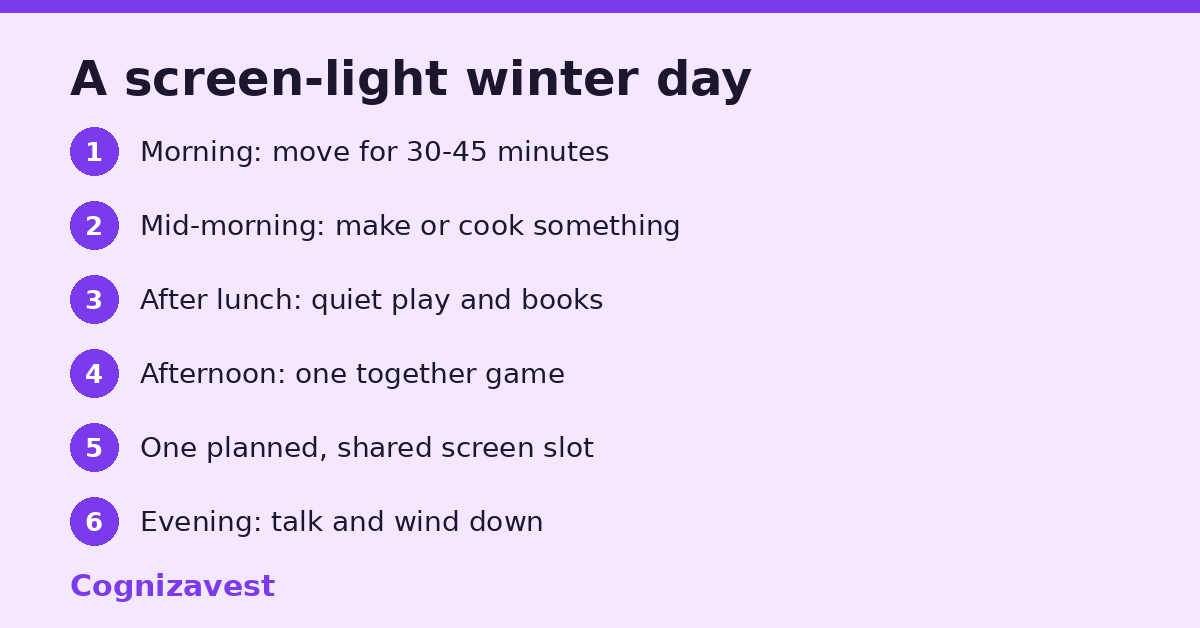
Children feel calmer with a predictable rhythm. Here is a flexible template; adjust timings to your family.
- Morning (after breakfast): move. 30 to 45 minutes of active play. On high-pollution days, keep it indoors: animal walks, a pillow obstacle course, freeze dance.
- Mid-morning: make something. Clay, colouring, a cardboard-box house, simple cooking such as rolling rotis or making a fruit chaat together.
- After lunch: quiet time. Picture books, puzzles, building blocks or rest. Quiet play is still play.
- Afternoon: one “together” game. Board games, hide and seek, “I spy”, or a treasure hunt with picture clues for younger children.
- Screen slot (if you use one): Fixed time, fixed length, content you have chosen, ideally watched together so you can talk about it.
- Evening: talk and wind down. No screens in the hour before bed. Ask one feelings question: “What was the best part of today? What was hard?”
Which activities help specific skills?
- Attention and patience: Jigsaw puzzles, sorting beads by colour, “Simon says”, growing a seed in a cup and watching it daily.
- Emotions: Make a “feelings face” chart, act out emotions with soft toys, read stories and ask how the character felt.
- Problem-solving: Build the tallest tower from paper cups, simple mazes, “how many ways can we use this box?”
- Language: Story chains where each person adds a line, naming things in Hindi and English, describing a picture together.
- Teamwork: Family clean-up races, cooking together, games where everyone wins only if they cooperate.
How do you reduce screen time without daily battles?
- Agree on rules before the holidays start, not in the middle of a tantrum. Children accept rules better when they know them in advance.
- Use a visual timer or a picture schedule so the end of screen time isn’t a surprise.
- Give a five-minute warning, then a clear next activity: “When the timer rings, we’ll make the clay snake.”
- Keep devices out of bedrooms and off the dining table.
- Model it. Children notice when adults scroll through meals.
- Expect some protest. Stay calm and consistent. It usually settles within a few days.
When should parents seek extra support?
Every child has difficult days, especially when routines change. Consider talking to your paediatrician or a qualified child professional if you notice ongoing concerns, such as very long or frequent meltdowns, trouble with sleep, losing skills your child already had, or difficulty connecting with others. Early, calm conversations help families understand what a child needs, without rushing to labels.
Want more play ideas like these?
Medhira by Cognizavest is a child development centre in Pitampura, Delhi, built around playful, psychology-informed activities for children and practical guidance for parents. If you’d like a weekly set of simple activity ideas for your child, message us on WhatsApp.
If you are a student interested in how children develop, explore our child psychology courses.
Frequently asked questions
Is educational content on YouTube okay for toddlers?
Under 2, the IAP advises no screens except video calls. From 2 to 5, short, supervised, good-quality content is fine within about an hour a day. Watching together and talking about it helps far more than watching alone.
My child gets angry when I take the phone away. What should I do?
Give a warning, use a timer, and offer a clear next activity. Stay calm and consistent. Anger at limits is normal at this age and usually eases once the routine is predictable.
What can kids do indoors on high-pollution days?
Try obstacle courses with cushions, freeze dance, animal walks, balloon volleyball, yoga poses for kids and indoor treasure hunts.
How many activities should I plan each day?
Three or four is plenty. Young children enjoy repetition, and unstructured free play counts too.
This article is for general information and is not medical advice. For concerns about your child’s health or development, consult your paediatrician.