



















Play Therapy Course · Online CertificateLearn to understand what children say through play.
A live, playful and professionally structured Certificate Course in Play Therapy, open to every stream. Turn art, puppets, sand, stories and games into purposeful therapeutic tools, grounded in Child-Centered, Adlerian, Cognitive Behavioral and Developmental Play Therapy.
A safer voice for difficult feelings
Puppets can create emotional distance, allowing a child to express conflict, fear or secrecy through a character rather than direct disclosure.
Playful on the surface. Purposeful underneath.
Five familiar play mediums, each turned into structured therapeutic techniques instead of random activities. Pick a block.
Build a world. Notice what it says.
In “Trauma Bridge”, a child arranges a past, present and future in the sand. Drag miniatures into the tray (or tap them) and see what a trained practitioner pays attention to.
Drop miniatures anywhere in the sand
Build a sample play session before you join.
Pick a concern and a play medium, or roll the dice. See how the technique follows the therapeutic purpose.
Two toy boxes. The bigger one holds both.
No psychology prerequisite. Begin with Month 1, or take the cumulative two-month Practitioner pathway.
Beginner Level
Build a structured base in play therapy models, expressive arts, puppetry, physical sandplay, storytelling, games and applications for trauma, grief, neurodevelopmental needs and adolescents.
Practitioner Level
Complete every Beginner topic, then progress to practitioner-level sandplay, trauma puppetry, dramatic play, CBT-informed play, expressive work and complex applications.
The training develops conceptual and practical exposure. Professional use must remain within each learner’s existing qualifications and scope.
Every model and technique, in the open.
Practitioner includes the complete Beginner curriculum plus Month 2 technique mastery and practitioner-level applications.
Month 1 · Beginner Level
01Core Play Therapy Models4 topics
- Child-Centered Play Therapy (CCPT): limit-setting, tracking behaviour and empathy through play
- Adlerian Play Therapy: encouragement, goal-disclosure games and lifestyle metaphors
- Cognitive Behavioral Play Therapy (CBPT): CBT-based storytelling, puppet role reversal and thought bubbles
- Developmental Play Therapy: mapping developmental gaps through symbolic play
02Expressive Arts3 techniques
- Feelings Thermometer Collage
- Mask Making for Inner & Outer Self
- Emotion Wheel Drawing
03Puppetry Techniques3 techniques
- Problem Puppet Interviews
- Secret Holder Puppet
- Puppet Time Travel: regression-based narrative technique
04Physical Sandplay3 techniques
- Build Your World: self-perception setup
- Trauma Bridge: past–present–future sandbox
- Safe Place Scene creation
05Therapeutic Storytelling & Metaphor3 techniques
- Incomplete Story Endings
- Create-a-Character for Emotion
- My Monster and Me metaphor activity
06Game-Based Techniques3 techniques
- Dice Talk with emotions and actions
- Feelings Card Game
- Therapeutic Board Game Creation as a group task
07Application: Trauma & Grief3 topics
- Using storytelling for trauma narration
- Building safe spaces in sandplay
- Drawing-based memory boxes for grief
08Application: Neurodevelopmental Disorders3 topics
- Sensory play with clay and textures
- Repetitive symbolic routines in sand
- Emotion-matching puppet games for ASD
09Application: Adolescents3 topics
- Comic-strip therapy: drawing their own narrative
- Journaling and collage combinations
- Self-portrait sculpture using clay
10Beginner Assignments3 topics
- Two fictitious case files: intake, diagnosis-mapping exercise and session goals
- One session plan using three techniques from different categories
- Self-reflection worksheet: “Who am I as a Play Therapist?”
Month 2 · Practitioner Level
11Practitioner Sandplay3 techniques
- Internal Family Setup using miniatures as family roles
- Conflict & Resolution Zone
- Future Self Island visioning
12Puppetry for Trauma & Role Reversal2 techniques
- Voice the Silence: silent puppetry with therapist voice
- Flashback & Safe Ending: replay trauma in new ways
13Dramatic Play3 techniques
- Scene Freeze: role stop-and-reflect
- Emotion Charades
- Chair Dialogue for inner conflict
14Practitioner CBT-Informed Play2 techniques
- Trigger to Thought Map using playcards
- Cognitive Comic Book for distorted beliefs
15Deepening Expressive Techniques3 techniques
- Emotion Timeline Drawing
- Parts of Self Collage
- Strength Mandala
16Application: Complex & Chronic Trauma3 topics
- Full trauma narrative through a puppet series
- Sandtray mapping of abuse cycles
- Parent–child joint art play for trauma recovery
17Application: Practitioner Neurodevelopmental Work3 topics
- Integrative sand, art and routine setup
- Visual sequencing through comic strips
- Sensory breaks and transitions in the playroom
18Application: Focused Adolescent Work3 topics
- Anger management through drama and expression
- Peer-issue resolution using scene re-creation
- Self-identity projects combining art and storytelling
Not a list of cute activities. A therapeutic pathway.
From “What activity should I do?” to “Why is this the right intervention?” The program connects models, named techniques, applications, session planning and ethical scope.
Two professional lenses, one playful room.
Rehabilitation psychology, clinical-psychology grounding and structured child-support learning, together.

Ayesha Narmawala
PGDRP · RCI CRR-A85502 · M.A. Clinical Psychology · B.A. Psychology
Ayesha connects rehabilitation and clinical psychology with child development, emotional communication and practical support planning. Her teaching style helps learners translate technique names into respectful, purposeful interventions.

Wasuddha Tikmani
3 years of experiencePh.D. Scholar · M.A. Clinical Psychology · B.A. Psychology · SET Qualified
Wasuddha brings academic structure, clinical-psychology grounding and research-oriented clarity to the play therapy classroom. Her teaching lens supports careful concept building, reflective questioning and responsible application.
Clear, warm and practically useful.
Reflections from earlier Cognizavest learning experiences with the trainers.
“A big thank you to her for the guidance and support. The sessions were well-structured, engaging and filled with practical knowledge.”
“She is extremely patient and knowledgeable. She acknowledged each participant, and the session was engaging and informative.”
“The sessions were friendly, fun and interactive, and learning never felt like a burden. The assignments helped me apply what I learned and kept me motivated.”
“Case presentation fostered confidence in me. Every session helped me understand rapport building, counselling skills and how to gradually grow as a counsellor.”
“The counselling psychology course was interesting and practical. The mix of theory, hands-on activities and discussions made learning more engaging and relatable.”
“The sessions were thoughtfully structured and created a safe, encouraging and non-judgmental space. The examples and demonstrations helped translate theory into practice.”
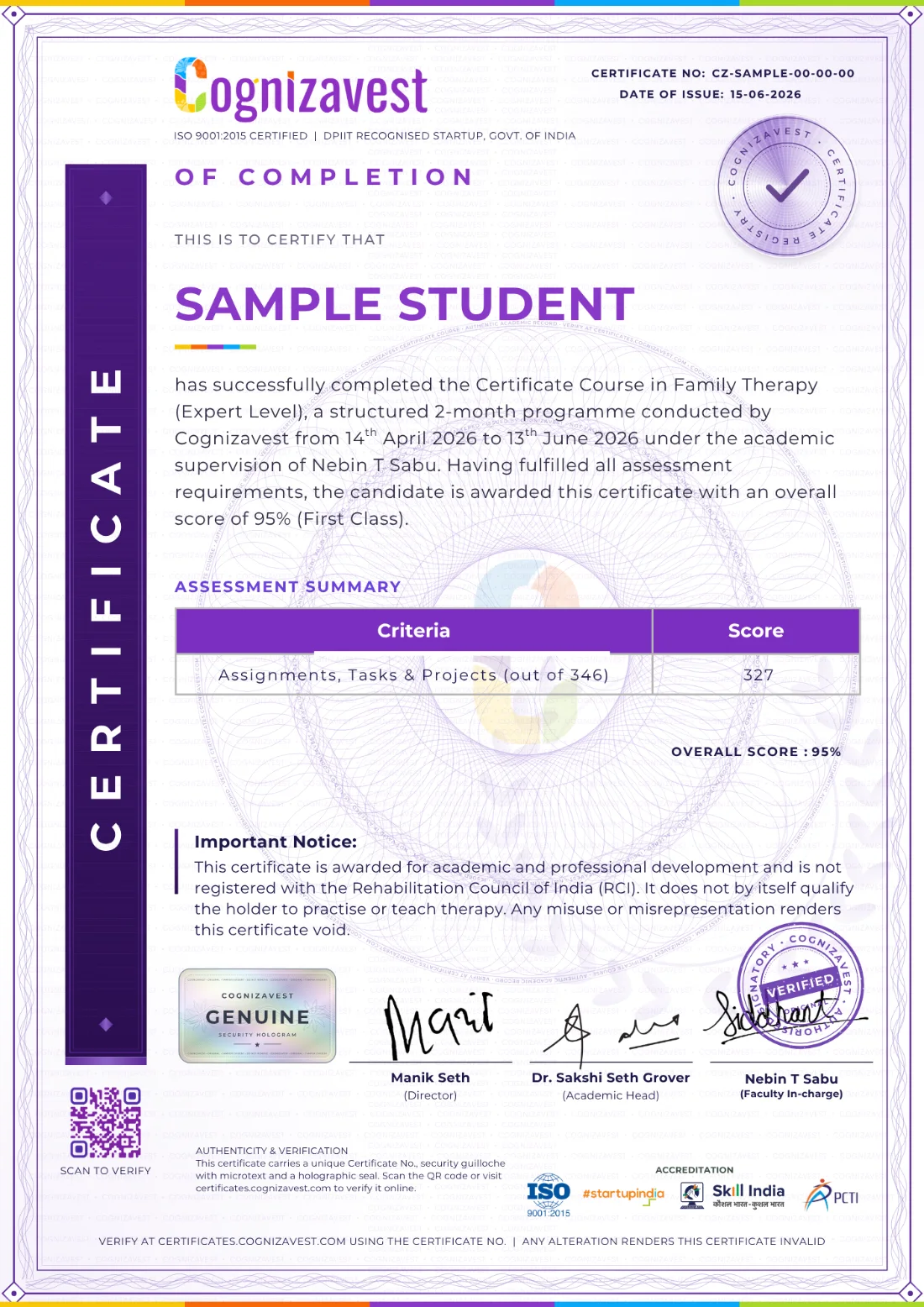
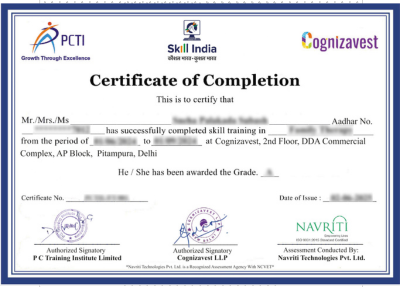
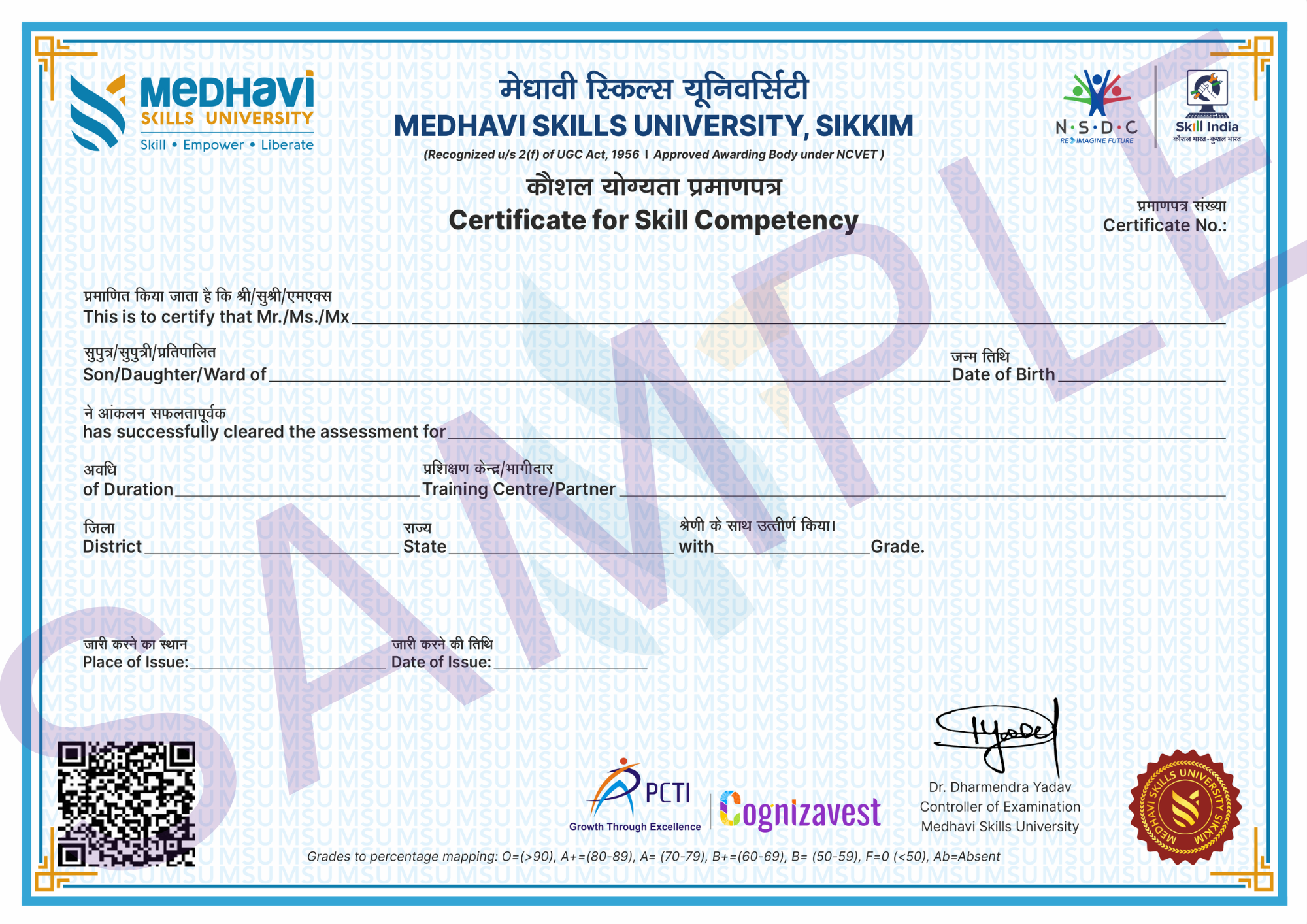
Make your learning visible.
Every eligible learner receives the level-specific Cognizavest certificate after completing course requirements. Two optional add-ons are available.
- 01Cognizavest certificate Included
Issued for the Beginner Level or the cumulative Practitioner Level completed.
- 02NCVET Skill India certificate + ₹1,500
Optional add-on, in addition to the Cognizavest certificate.
- 03University certificate + ₹2,500
Optional Certificate for Skill Competency issued by Medhavi Skills University after assessment. Can be combined with NCVET.
Note: add-on certificate fees (NCVET ₹1,500, university ₹2,500) are optional, separate from the course fee, and are collected by our team after you enroll. Certificates document training and do not independently license psychotherapy practice.
Choose the pathway that fits your goal.
Begin with Month 1 or complete the cumulative two-month Practitioner pathway.
- Cognizavest certificateIncluded
- NCVET Skill India+ ₹1,500 · optional
- University certificate+ ₹2,500 · optional
Practitioner Level
Secure checkout · certificate add-ons are opted separately after enrollment
Questions before you pay? Chat with us on WhatsApp
Everything to know before you enter the playroom.
Tell us your background and we will suggest the right level.
Ask on WhatsAppWhat is play therapy?
Play therapy is a therapeutic approach that uses play, the natural language of children, to help them express feelings, process experiences and build coping skills. Trained practitioners use structured models and materials such as art, puppets, sand, stories and games with a clear therapeutic purpose.
Who can join the Play Therapy course?
Both Beginner and Practitioner levels are open to learners from any stream. Psychology students, educators, special educators, parents, child-development professionals and other interested learners may join.
What is the difference between Beginner and Practitioner?
Beginner is a one-month pathway covering core models, named techniques, applications and assignments. Practitioner is a cumulative two-month pathway and includes the complete Beginner curriculum plus practitioner-level sandplay, puppetry, dramatic play, CBT-informed play, expressive techniques and complex applications.
Which play therapy models and techniques are covered?
Child-Centered Play Therapy (CCPT), Adlerian Play Therapy, Cognitive Behavioral Play Therapy (CBPT) and Developmental Play Therapy, with named techniques across expressive arts, puppetry, physical sandplay, therapeutic storytelling and metaphor, games and, at Practitioner Level, dramatic play and CBT-informed play.
When does the next batch start?
The next Play Therapy batch starts on 4 January 2027. Live online classes are held every Monday and Wednesday from 6 PM to 7 PM IST.
Is sandplay conducted online?
The syllabus covers physical sandplay techniques and their therapeutic structure. Learners may need access to appropriate physical materials for practice where relevant.
Which certificates will I receive?
The level-specific Cognizavest certificate is included after successful completion. Learners may additionally opt for the NCVET Skill India certificate at ₹1,500. A university certificate (Certificate for Skill Competency, Medhavi Skills University) is also available as a third, optional add-on at ₹2,500. Add-on fees are separate from the course fee and are collected by our team after enrollment.
Does the certificate allow independent therapy practice?
No. The certificate documents professional learning. Independent clinical or therapeutic practice must remain within the learner’s existing qualifications, legal scope, competence and supervision requirements.
Who are the trainers?
The trainers are Ayesha Narmawala and Wasuddha Tikmani. Faculty allocation and session distribution may vary while the stated learning outcomes remain consistent.
What are the fees?
Beginner Level is ₹2,999 and Practitioner Level is ₹5,999. Practitioner includes the complete Beginner and Practitioner curriculum. Optional certificate add-ons (NCVET ₹1,500, university ₹2,500) are in addition to the selected course fee.
Every child has something to say. Learn to hear it through play.
Live classes every Monday and Wednesday, 6–7 PM IST. Open to every stream. Choose 1 or 2 months.
