









Certificate Course in Fertility & Infertility CounsellingInfertility is treated in clinics. It is lived everywhere else.
A first-of-its-kind, 2-month live online infertility counselling course for counsellors and psychology learners. Learn to support clients through stigma, family pressure, treatment uncertainty, waiting periods, relationship strain and grief, with a clear line between counselling and medical care.
people of reproductive age worldwide experience infertility in their lifetime, according to the World Health Organization (2023).
The same appointment. Two very different lenses.
Fertility care in India is growing, but trained emotional support has not kept pace. See what a client also carries into every appointment.
- Investigations
- Diagnosis
- Treatment options
- Medication schedules
- Procedures
- Test results
- Fear before tests
- What the diagnosis means
- Decision fatigue
- Body image and identity
- The long wait
- Family questions
- Relationship strain
- Grief after a failed cycle
Both are needed. This course trains the second lens, and teaches exactly where it ends.
Turn the dial. See where the counsellor stands.
Each stage brings different feelings, a different counselling task and a different boundary.
Fourteen days can feel longer than a year.
The wait between a treatment cycle and its result is one of the hardest stretches of the journey. Slide through it and see how support changes as the days pass.
Timelines vary by treatment and clinic. Questions about symptoms, medication or results always go to the medical team.
The wrong sentence deepens shame. The right one creates safety.
Four things clients really say. Pick the response you would give.
Counsellor, medical team, or nobody at all?
Knowing what is not yours to say is half of fertility counselling. Sort six moments.
Who should join this course?
No medical training needed. Sensitivity, a counselling orientation and respect for boundaries are. Tap the description closest to you.
Important boundary: this is not a medical infertility course. Learners do not interpret reports, advise on IVF, IUI or other treatment, prescribe lifestyle plans or replace doctors. The focus is counselling, psychosocial support, coping, grief, family pressure, relationship concerns and referral readiness.
Seven modules. From meaning to grief.
Foundations and boundaries, psychological impact, assessment, the treatment journey, relationships and family, coping, and loss.
01Foundations of Infertility CounsellingModule 1 · Meaning, myths, role, boundaries and session structure
- Meaning of fertility, infertility and involuntary childlessness
- Primary, secondary and unexplained infertility
- Infertility as a psychological, social and reproductive experience
- Common fertility myths and misconceptions
- Scope and role of an infertility counsellor
- Difference between counselling, psychotherapy and medical consultation
- Professional limitations of an infertility counsellor
- Basic counselling skills
- Confidentiality and informed consent
- Professional boundaries
- Non-judgmental and inclusive language
- Recognising emotional distress
- Basic mental health red flags
- When and where to refer
- Introduction to structuring an infertility counselling session
- Counsellor sensitivity towards personal beliefs about parenthood
02Psychological Impact of InfertilityModule 2 · Identity, stigma, triggers and emotional reactions
- Emotional reactions to infertility
- Stress, anxiety, sadness, anger, guilt and helplessness
- Shame, self-blame and perceived inadequacy
- Impact on identity, confidence and body image
- Social comparison, pregnancy-related triggers and isolation
- Infertility-related stigma in the Indian context
03Infertility-Focused AssessmentModule 3 · Psychosocial history, support systems and preliminary goals
- Taking a fertility-related psychosocial history
- Understanding the client’s fertility journey
- Exploring treatment history without interpreting reports
- Assessing emotional distress and coping
- Understanding the meaning of parenthood for the client
- Identifying fertility-related triggers
- Assessing available support systems
- Developing preliminary counselling goals
04Counselling Across the Fertility JourneyModule 4 · Evaluation, diagnosis, treatment, waiting periods and results
- Counselling before fertility evaluation
- Counselling after an infertility diagnosis
- Emotional preparation for investigations
- Supporting clients during fertility treatment
- Counselling during waiting periods
- Managing uncertainty and repeated reassurance-seeking
- Supporting clients after treatment results
- Preparing clients emotionally for possible outcomes
05Infertility-Specific Relationship and Family ConcernsModule 5 · Partner responses, pressure, privacy and referral boundaries
- This module does not teach general couple or family therapy.
- Differences in how partners respond to infertility
- Blame, guilt, withdrawal and communication difficulties
- Supporting partners with different coping styles
- Infertility-related intimacy and sexual pressure
- Family pressure to conceive
- Intrusive questions and insensitive comments
- Disclosure and privacy decisions
- Developing healthy infertility-related boundaries
- Knowing when specialist couple or family therapy is required
06Coping, Adjustment and Emotional SupportModule 6 · Coping, triggers, support plans and identity protection
- Adaptive and maladaptive coping
- Managing social and pregnancy-related triggers
- Reducing emotional overwhelm
- Maintaining identity outside infertility
- Supporting work, social life and daily functioning
- Self-compassion and body respect
- Developing fertility-treatment support plans
- Preventing treatment from becoming the client’s entire identity
07Infertility-Related Loss and GriefModule 7 · Ambiguous grief, unsuccessful treatment and sensitive support
- Loss of the expected reproductive future
- Ambiguous and disenfranchised grief
- Grief following unsuccessful treatment
- Cycle cancellation and treatment-related disappointment
- Repeated treatment failure
- Grief differences between partners
- Supporting grief without forcing acceptance or closure
- Developing sensitive grief-support conversations
Two counselling lenses for a deeply sensitive journey.
Tap a card to meet each trainer.
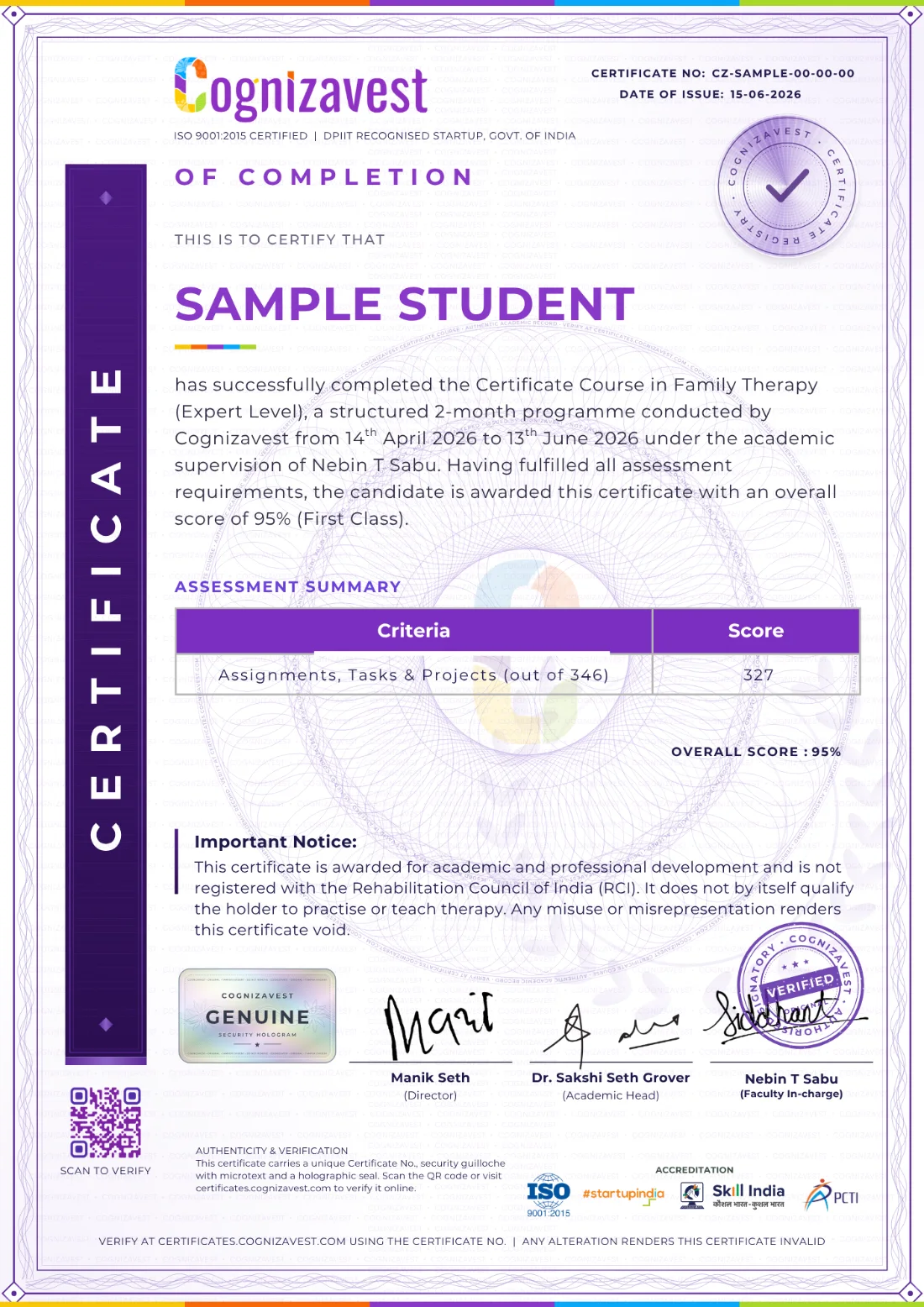
A certificate in a skill few counsellors have.
The Cognizavest certificate is included. You can add the NCVET Skill India certificate, and can also opt for a university certificate.
- 01Cognizavest certificate Included
Course-completion certificate after course requirements are met.
- 02NCVET Skill India certificate + ₹1,500
Optional add-on, opted for separately through enrollment support.
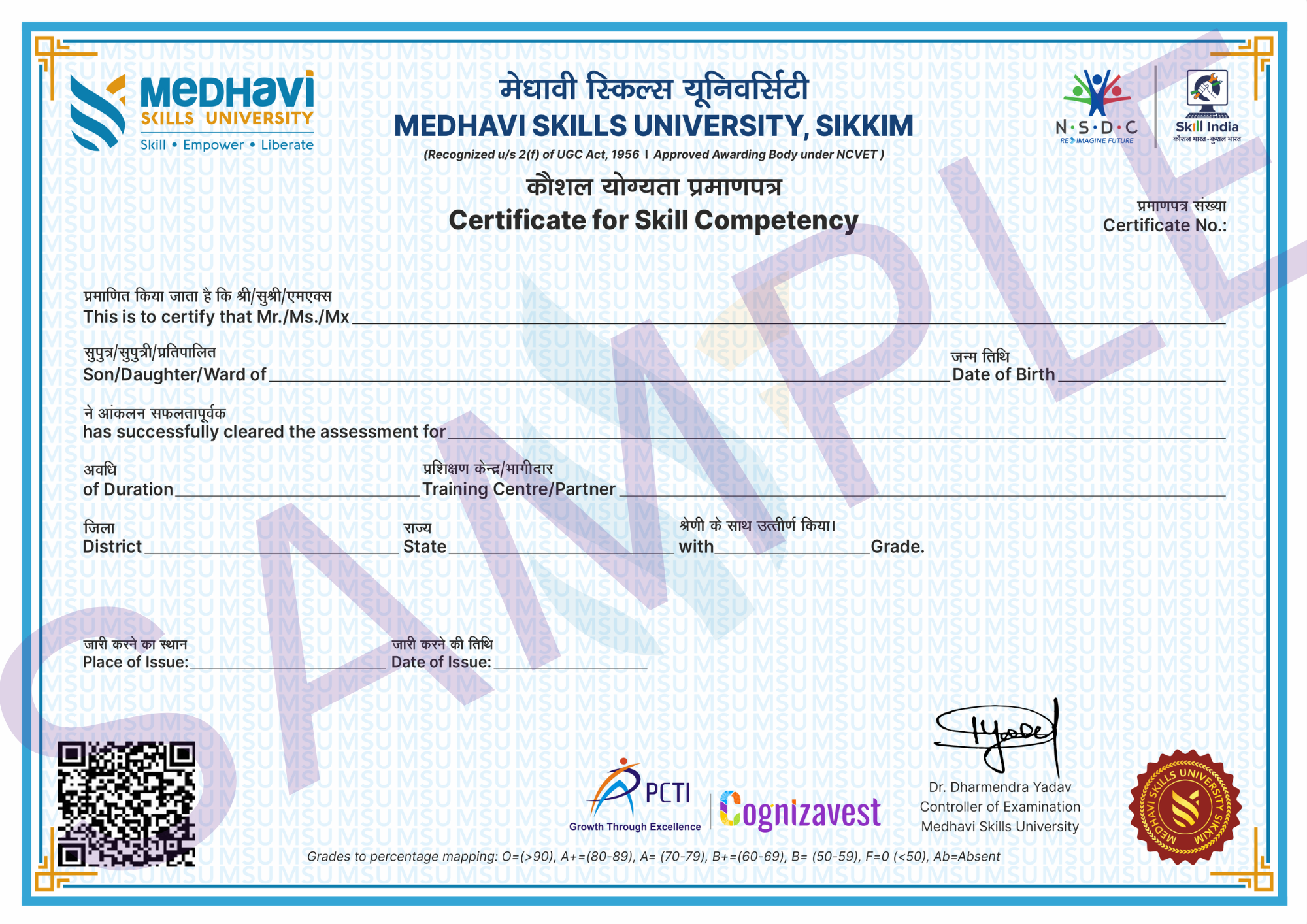
- 03University certificate + ₹2,500
Optional Certificate for Skill Competency issued by Medhavi Skills University after assessment. Can be combined with NCVET.
Note: add-on certificate fees (NCVET ₹1,500, university ₹2,500) are optional, not part of online checkout, and are collected separately by our team after you enroll. The certificate documents counselling training; it does not replace medical qualification or authority over fertility treatment.
Join the first December 2026 cohort.
One course fee, live classes twice a week, a 7-module syllabus and optional learning add-ons.
Fertility Counselling · Certificate
Secure SSL checkout
Questions before you pay? Chat with us on WhatsApp
Clear answers for a sensitive course.
Tell us your background and we will help you decide if this course fits.
Ask on WhatsAppWhat is fertility counselling?
Fertility (or infertility) counselling is psychological support for people facing difficulties conceiving. It addresses the emotional, relational and social side of the journey: stress, shame, stigma, family pressure, treatment uncertainty, waiting periods, relationship strain and grief. It works alongside medical care, never in place of it.
What makes this course first of its kind in India?
It is built psychology-first: instead of teaching medical treatment, it trains counsellors and psychology learners in infertility-related emotional support, India-specific stigma and family pressure, and the clear boundary between counselling and medical consultation.
When does the course start?
The batch starts on 22 December 2026. Live online classes are held twice a week, on Tuesday and Thursday, from 6 PM to 7 PM IST.
What is the duration and fee?
The course runs for 2 months and the fee is ₹5,000. Optional add-ons: Hardcopy Course Notes (₹499) and a Diary (₹199, or ₹99 with Hardcopy Notes).
Who should join this fertility counselling course?
Counsellors and counselling trainees, psychology students, graduates and postgraduates, mental-health professionals, school and college counsellors, wellness professionals, fertility-clinic support teams and helping professionals who want structured training in infertility-related emotional support.
Does the course teach medical infertility treatment?
No. It does not teach report interpretation, treatment decisions such as IVF or IUI, or medical consultation. It teaches counselling support, psychosocial history, distress recognition, coping, family and relationship concerns, grief support and referral boundaries.
What will I learn?
Seven modules: foundations of infertility counselling, the psychological impact of infertility, infertility-focused assessment, counselling across the fertility journey, relationship and family concerns, coping and adjustment, and infertility-related loss and grief.
Who are the trainers?
Dr. Sakshi Seth Grover (Ph.D. Psychology, PGDRP, RCI Registered, UGC NET qualified; 11+ years of experience) and Ayesha Narmawala (PGDRP, RCI CRR-A85502, M.A. Clinical Psychology; 4+ years of experience).
Which certificates will I receive?
A Cognizavest course-completion certificate after meeting program requirements. You can add the NCVET Skill India certificate (₹1,500) and, as a third optional choice, a university Certificate for Skill Competency from Medhavi Skills University (₹2,500). Add-on fees are collected separately by our team after enrollment.
Are classes live? Are recordings available?
Classes are live online, twice a week, with applied discussion and practice. Contact the team on WhatsApp for current recording access details.
Be the counsellor who hears what’s beneath.
Live classes every Tuesday and Thursday, 6–7 PM IST. 2 months, 7 modules, ₹5,000.