










Grief Counselling Course · Certificate in Grief & Bereavement CounsellingGrief doesn’t shrink. Life grows around it.
A live, online Certificate Course in Grief Counselling. Learn to sit with loss without rushing it: grief and bereavement models, complicated and hidden grief, Indian family rituals, core grief techniques, family support, ethics and referral.
Grief fills almost everything. Eating, sleeping and talking can all feel impossible.
Illustration based on Lois Tonkin’s model of growing around grief.
Kind words can still close a door.
Choose how you would respond. See which replies shrink the loss, and which ones make room for it.
Healthy grieving swings back and forth.
Grieving people move between facing the loss and rebuilding daily life. Sort each moment and watch the swing.
Stroebe & Schut’s Dual Process Model is covered in Module 2, alongside Worden’s tasks, continuing bonds and meaning reconstruction.
Not all grief looks like a funeral.
Some losses are visible to everyone. Others are quiet, unrecognised or still happening. Light each lamp to see what a counsellor looks for.
0 of 6 lamps lit
From a loss story to safe, structured support.
Tap a learner goal to see the skill pathway this course builds.
Three levels. Each one builds on the last.
From grief foundations to practitioner-level session work. Fees include taxes.
Beginner
Grief foundations
Modules 1–4 of 12
- Grief, loss and bereavement
- Kübler-Ross, Worden, Dual Process, continuing bonds
- Types of loss and forms of grief
- Basic grief support skills
Expert
Everything in Beginner, plus
Modules 1–8 of 12
- Complicated and prolonged grief
- Anticipatory, ambiguous and disenfranchised grief
- Grief across the lifespan
- Culture, religion and Indian family systems
Practitioner
₹3,000 now · ₹2,000 after month 1 · ₹2,000 after month 2
All 12 modules
- Session structure and grief history
- Core techniques: memory work, letters, empty chair
- Supporting families and groups
- Practitioner certificate · optional NCVET (+₹1,500) and university (+₹2,500)
Twelve modules. From understanding to practice.
The complete grief counselling syllabus, level by level. Filter to see exactly what your fee includes.
Beginner Level · Foundations · 1 Month
01Understanding Grief, Loss and Bereavement8 topics
- Meaning of grief, loss, mourning and bereavement
- Difference between normal sadness and grief
- Emotional, cognitive, physical, behavioural and social reactions to grief
- Myths and misconceptions about grief
- Why grief is not linear
- Difference between grieving and moving on
- Role of culture, family and rituals in grief
- Grief as adjustment, not forgetting
02Major Theories and Models of Grief8 topics
- Kübler-Ross model and its limitations
- Worden’s Tasks of Mourning
- Dual Process Model of Grief
- Continuing Bonds Theory
- Meaning Reconstruction Theory
- Attachment perspective on grief
- Stage-based vs task-based models
- Using theory sensitively without forcing one model
03Types of Loss and Forms of Grief8 topics
- Death-related grief
- Breakup, divorce and relationship loss
- Loss of health, body image or physical ability
- Career, job and financial loss
- Migration, relocation and identity loss
- Loss of dreams, expectations and future plans
- Pet loss, miscarriage, infertility and pregnancy loss
- Ambiguous, anticipatory, disenfranchised and collective grief
04Basic Grief Support Skills8 topics
- How to listen to a grieving person
- What to say and what not to say
- Emotional validation and reflective responses
- Holding silence in grief conversations
- Avoiding toxic positivity and forced hope
- Empathy vs sympathy
- Supporting without minimizing the loss
- Basic grief psychoeducation, triggers, anniversaries and boundaries
Expert Level · Deeper grief · 2 Months
05Complicated Grief and Prolonged Grief8 topics
- Normal grief vs complicated grief
- Prolonged Grief Disorder: basic understanding
- Risk factors for complicated grief
- Persistent yearning and preoccupation
- Avoidance of reminders and functional impairment
- Guilt, anger, numbness and identity disruption
- Grief vs depression and grief vs trauma
- Referral indicators and professional boundaries
06Anticipatory, Ambiguous and Disenfranchised Grief8 topics
- Anticipatory grief in terminal illness, dementia and caregiving
- Caregiver grief before and after loss
- Ambiguous loss in missing persons, emotional absence and separation
- Disenfranchised grief after unrecognized losses
- Miscarriage, infertility, abortion and stillbirth
- Grief in non-accepted relationships
- Pet loss and invalidated grief
- Language of validation in hidden grief
07Grief Across the Lifespan8 topics
- How children understand death at different ages
- Common grief reactions in children
- Play, drawing and storytelling in child grief support
- Adolescent grief, anger, withdrawal and identity confusion
- Adult grief and role changes
- Elderly grief, loneliness and multiple losses
- Widowhood, parental grief and sibling grief
- Supporting families with different grieving styles
08Culture, Religion and Indian Family Systems in Grief8 topics
- Death rituals and mourning practices in Indian contexts
- Religious and spiritual beliefs around death
- Meaning of rituals in grief processing
- Family expectations after loss
- Gendered expression of grief and pressure to be strong
- Widowhood, remarriage and stigma
- Joint family dynamics after death
- Respecting belief systems and using rituals for meaning-making
Practitioner Level · Practice · 3 Months
09Grief Counselling Process and Session Structure8 topics
- First session in grief counselling
- Building safety and trust
- Taking grief history sensitively
- Understanding the nature of the loss
- Identifying support systems
- Exploring emotional, physical and relational impact
- Setting realistic counselling goals
- Memories, continuing bonds, anniversaries, closure and documentation basics
10Core Techniques in Grief Counselling8 topics
- Active listening and emotional reflection
- Grief timeline and memory work
- Continuing bonds exercises
- Letter writing to the deceased or lost relationship
- Empty chair conversation for unfinished emotions
- Meaning-making questions
- Grounding during emotional overwhelm
- Ritual planning, grief journaling, family memory sharing and coping plans
11Supporting Families and Groups in Grief8 topics
- Family grief patterns and different grieving styles
- Supporting parents, children and siblings together
- Family communication after loss
- Conflict after death or separation
- Grief after suicide or sudden death in families
- Helping families create shared rituals
- Basics of grief support groups
- Group safety, boundaries and when group support is not suitable
12Ethics, Boundaries and Referral in Grief Work8 topics
- Ethical boundaries in grief counselling
- Scope of practice for non-psychology learners
- Confidentiality and its limits
- Handling intense emotional disclosure
- Red flags in grief work
- Suicidal ideation and self-harm risk awareness
- Severe depression, PTSD symptoms and psychiatric referral
- Substance use after loss, domestic violence, documentation, consent and crisis referral
From “I understand grief” to “I can respond safely.”
Many grief trainings stop at definitions. This one stays on application: support skills, family work, techniques, ethics, boundaries and referral clarity.
Grief counselling readiness for real helping roles.
Where you can apply it
Learners build readiness to understand grief presentations, support meaning-making, plan difficult-day coping, guide families, recognise red flags and know when psychiatric, trauma-informed or crisis referral is required.
Certification documents training. Apply skills within your qualifications, role, scope and supervision.
Skills you leave with
Practical, transferable skills you can describe on your CV and LinkedIn.
Cognizavest community. Alumni get access to events, supervision programs and offline community meet-ups across India.
A practical path into grief counselling skills.
- Supportive grief work
Learn to support grief through listening, validation, silence and compassionate presence without rushing the person to move on.
- Foundations
Understand grief as a non-linear adjustment process shaped by culture, rituals, family systems and the meaning of the loss.
- Grief models
Explore grief models including Worden, Dual Process, continuing bonds and meaning reconstruction without forcing one model on every client.
- Referral readiness
Build readiness to recognise complicated grief, depression overlap, trauma overlap, suicide risk and referral indicators.
- Core techniques
Practise grief-specific techniques such as timelines, memory work, letters, continuing bonds, symbolic closure and coping plans.
- Family & groups
Learn to support families with different grieving styles, conflict after loss, shared rituals and group safety boundaries.
- Culture
Understand Indian family systems, rituals, gendered expression of grief, widowhood stigma and collectivistic grieving contexts.
- Boundaries
Build ethical clarity around scope, confidentiality, intense disclosure, documentation, crisis pathways and professional boundaries.
Meet your trainers.
Learn directly from trainers with psychology and clinical counselling backgrounds.

Ayesha Narmawala
PGDRP (RCI CRR-A85502) · M.A. Clinical Psychology · B.A. Psychology
Extensive experience in advanced diagnostics and therapeutic intervention.

Dr. Sakshi Seth Grover
12+ years of experiencePhD in Psychology · PGDRP (RCI CRR-A118591) · UGC NET qualified
Counsellor, psychotherapist, career coach, family therapist and organizational psychologist.
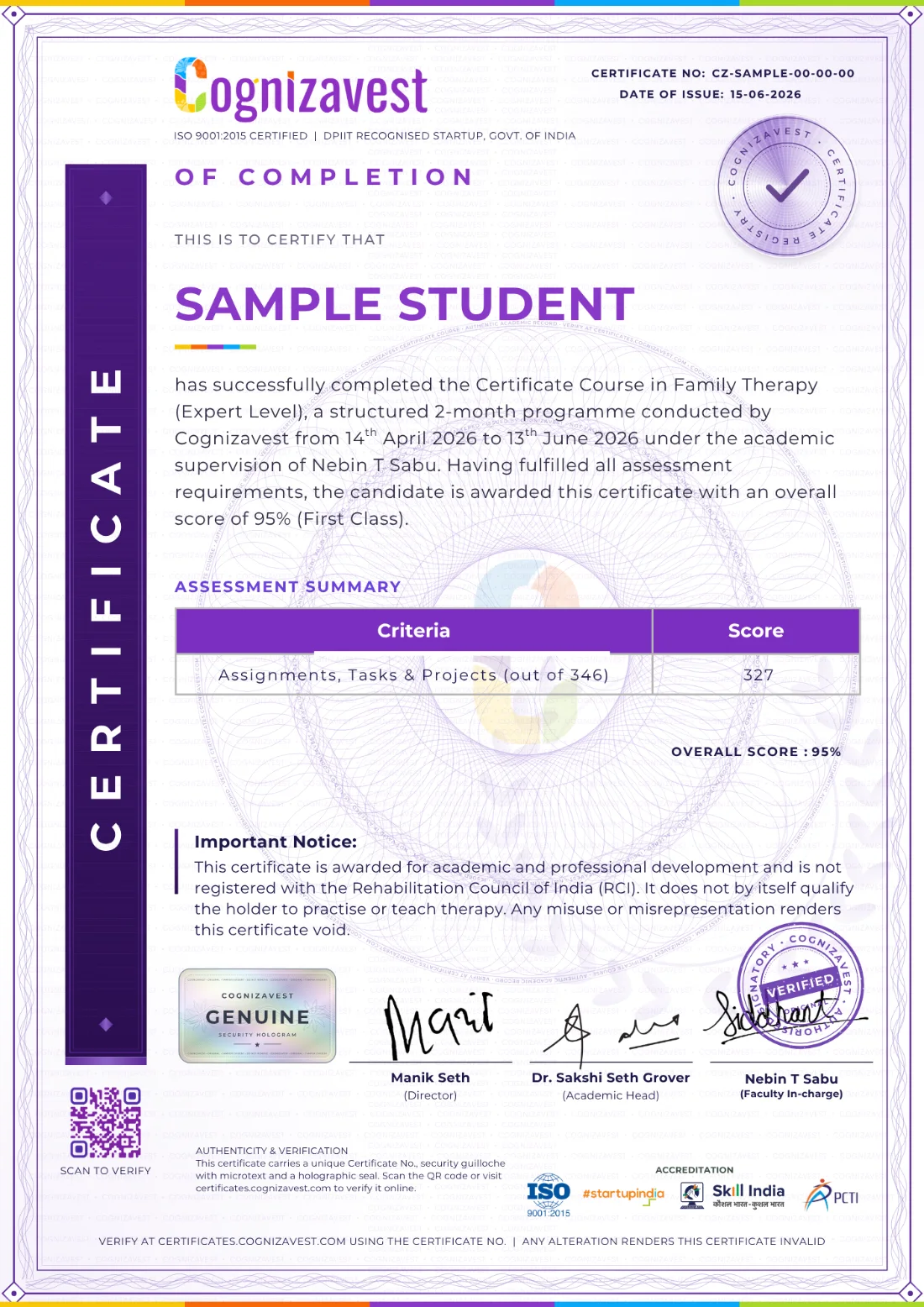
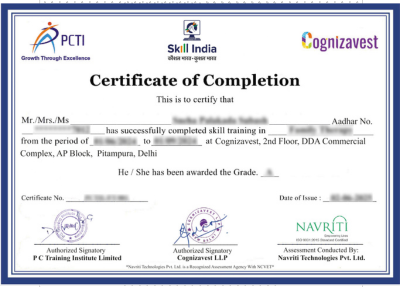
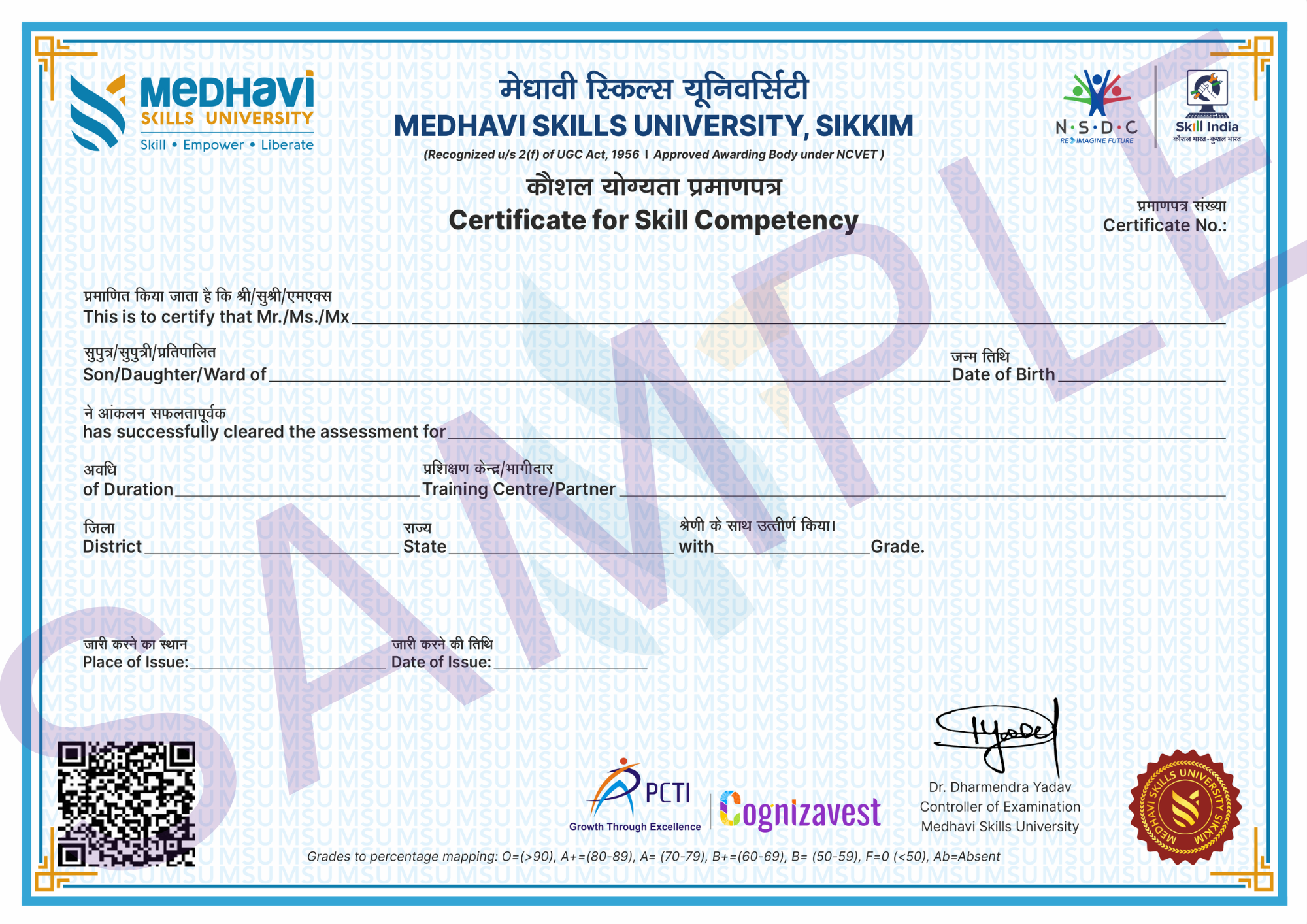
Make your learning visible.
Cognizavest certification is part of completion. Practitioner Level learners can add the NCVET Skill India certificate, and can also opt for a university certificate.
- 01Cognizavest certificate Included
Hardcopy certificate issued after fulfilling course requirements and completion review.
- 02NCVET Skill India certificate + ₹1,500
Optional add-on for Practitioner Level learners.
- 03University certificate + ₹2,500
Optional Certificate for Skill Competency issued by Medhavi Skills University after assessment. Practitioner Level; can be combined with NCVET.
Note: the Practitioner certificate is for Practitioner Level and Masters students. Add-on certificate fees (NCVET ₹1,500, university ₹2,500) are optional, not part of online checkout, and are collected separately by our team after you enroll.
Secure your seat with a clear plan.
Confirm your batch, choose your level, add resources if you want them, and check out.
Secure SSL checkout
Questions before you pay? Chat with us on WhatsApp
Everything to know before you enroll.
Tell us your background and we will suggest the right level.
Ask on WhatsAppWhat is grief counselling?
Grief counselling helps people cope with the emotional, physical, social and practical effects of loss. That includes bereavement and also non-death losses such as divorce, job loss, migration or pregnancy loss. It offers a safe space to express grief and supports adjustment, while recognising when complicated grief or risk needs referral.
When does the next batch start?
The next Grief Counselling batch starts on 2 February 2027. Live online classes run every Tuesday and Thursday from 7:00 PM to 8:00 PM IST.
Are the classes conducted live?
Yes. The Certificate Course in Grief Counselling is conducted through live online classes with interaction, discussion and trainer-led application.
Who can enroll?
Psychology bachelor’s students and graduates, master’s students in psychology-related fields, and professionals working in mental health and psychology.
What are the levels, duration and fees?
Beginner Level is 1 month at ₹2,999 (Modules 1–4). Expert Level is 2 months at ₹4,999 (Modules 1–8). Practitioner Level is 3 months at ₹6,999 (all 12 modules). Levels are cumulative and fees include taxes.
Is there a payment plan?
Yes. Practitioner learners can pay ₹3,000 as the registration fee, then ₹2,000 after the first month and ₹2,000 after the second month.
What is covered in the course?
Grief, loss and bereavement, grief theories (Kübler-Ross, Worden, Dual Process, continuing bonds, meaning reconstruction), types of loss, basic grief support skills, complicated and prolonged grief, anticipatory, ambiguous and disenfranchised grief, grief across the lifespan, culture and Indian family systems, session structure, core techniques, family and group support, ethics, boundaries and referral.
Which certificates will I receive?
Learners receive the Cognizavest certificate after meeting course requirements. Practitioner Level learners can add the NCVET Skill India certificate (₹1,500) and, as a third optional choice, a university Certificate for Skill Competency from Medhavi Skills University (₹2,500). Add-on fees are collected separately by our team after enrollment.
Who are the trainers?
The trainers are Ayesha Narmawala (PGDRP, RCI CRR-A85502; M.A. Clinical Psychology; B.A. Psychology) and Dr. Sakshi Seth Grover (PhD in Psychology; PGDRP, RCI CRR-A118591; UGC NET qualified; 12+ years of experience).
Will this course qualify me to treat complicated grief or trauma?
No. The course builds grief counselling skills and teaches you to recognise complicated grief, depression, trauma and suicide-risk indicators so you can refer appropriately. It does not replace a clinical qualification or licence; apply what you learn within your role, scope and supervision.
What is the refund policy?
Cognizavest follows a strict no-refund policy for programs. Batch shifting may be considered only as per policy timeline and conditions.
Hold space for loss. Learn to do it well.
Live classes every Tuesday and Thursday, 7–8 PM IST. Choose 1, 2 or 3 months.