



















Master modern cognitive therapy models for structured therapeutic work.
A 6-month online diploma for psychology-background learners who want to understand, integrate and apply cognitive therapy models such as CBT, REBT, DBT and ACT with case formulation, role plays, supervision and practical planning.
Everything important, visible before you decide.
Batch, timing, mode, papers, supervision, certification and completion requirements are kept clearly visible before enrollment.
For psychology-background learners.
Because this diploma is therapy-specific and includes cognitive therapy models, formulation, case planning and supervised practice orientation, it is designed for learners with a psychology or mental-health academic/professional background.
Bachelor students
Open to students currently pursuing or those who have completed a Bachelor’s degree in Psychology or a closely related mental-health field.
Masters students
Available for students currently pursuing or those who have completed a Master’s degree in Psychology, Clinical Psychology or Counseling Psychology.
Professionals
Welcoming psychologists, counsellors, mental-health workers and allied professionals who want structured cognitive therapy training and practical clarity.
Cognitive therapy learning needs more than one model. It needs integration, formulation and practice.
The diploma helps learners understand the shared cognitive foundation behind multiple therapeutic approaches and apply them strategically in client scenarios.
Multiple cognitive models
Learn CBT, REBT, DBT and ACT as connected cognitive-based frameworks instead of studying each model in isolation.
Thought-pattern clarity
Develop the ability to identify automatic thoughts, cognitive distortions, irrational beliefs, values conflicts and maladaptive patterns.
Case-to-plan application
Build practical tools such as case conceptualization, session plans, homework structures, role-play practice and final case presentation readiness.
From thinking patterns to therapeutic intervention.
The diploma trains learners to observe cognition, formulate client concerns, match therapy models and design structured interventions.
Cognitive therapies begin with shared foundations.
Learners study how thoughts, emotions and behaviors interact, and how structured therapy sessions turn insight into change.
From a client concern to a cognitive therapy plan.
The diploma helps learners move step-by-step from identifying patterns to choosing interventions and presenting a structured case plan.
Map the concern
Start with the presenting issue, emotions, triggers, behaviors, thinking patterns and current coping style.
Formulate cognition
Identify automatic thoughts, core beliefs, irrational beliefs, schema patterns and cognitive distortions.
Select the model
Match the client need with CBT, REBT, DBT, ACT or an integrated cognitive therapy direction.
Plan and present
Build homework tasks, session plans, intervention logic, final case submission and viva-ready reflection.
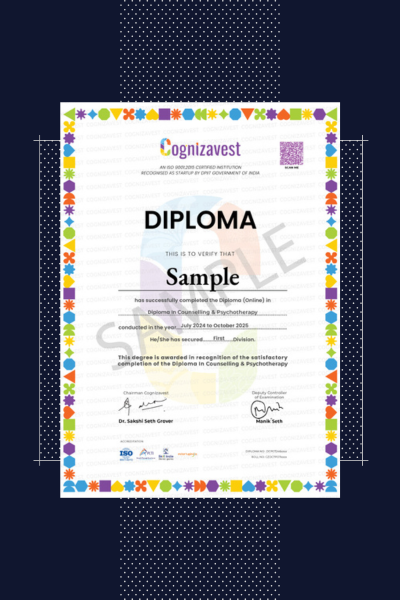
Earn a recognized diploma after successful completion.
The program includes Skill India / NCVET aligned certification positioning, examinations, practical completion requirements and hardcopy diploma documentation.
Designed for professional credibility
Hardcopy CertificateStudents complete live classes, practical work, supervision-linked activities and assessments. Diploma documentation is processed after successful completion and result declaration.
Certificate that reflects structured learning.
Students receive diploma documentation after meeting attendance, practical and examination criteria.
- Skill India / NCVET aligned positioning
- Hardcopy diploma dispatch after completion
- Useful for academic and professional progression
Assessment pathway with measurable criteria.
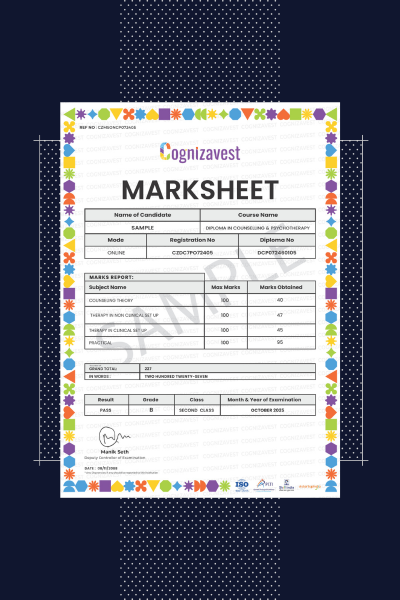
Students complete examinations and practicals to demonstrate learning and applied understanding.
- Minimum 60% attendance requirement
- Minimum 40% marks in practicals and exams
- Result-linked diploma processing
A 7-paper structure covering CBT, REBT, DBT, ACT, integration and supervised project work.
The syllabus builds from cognitive therapy foundations to structured therapy models, special populations and final case presentation.
- Origins & Evolution
- History and development of cognitive therapy models
- Common elements across cognitive approaches
- Therapy Structure
- Sessions, goals, phases and therapeutic planning
- Role of thoughts, emotions and behaviors in distress
- Psychoeducation & Homework
- Rapport building and psychoeducation methods
- Thought logs, diaries and common client homework structures
- CBT Model
- A-B-C-D framework and cognitive-behavioral case understanding
- Identifying automatic thoughts and core beliefs
- CBT Techniques
- Socratic questioning and cognitive distortions
- Behavioral experiments and exposure techniques
- Session Planning
- Activity scheduling, thought records and homework planning
- Structure, agenda setting and termination in CBT sessions
- REBT Theory
- ABCDE model and emotional-behavioral consequences
- Irrational beliefs including musturbation, awfulizing and low frustration tolerance
- Disputation Techniques
- Logical, empirical and functional disputation
- Rational belief worksheets and cognitive restructuring
- Emotional and Behavioral Work
- REBT emotional techniques
- Behavioral assignments and emotive roleplay
- DBT Origins & Philosophy
- Dialectics, validation and change-oriented stance
- Therapist role and teaching DBT skills in sessions
- DBT Modules
- Mindfulness skills and distress tolerance
- Emotion regulation and interpersonal effectiveness
- DBT Tools
- Diary cards and chain analysis
- Skills coaching orientation and practice examples
- ACT Model
- The Hexaflex and psychological flexibility
- Cognitive defusion, self-as-context and acceptance
- Values-Based Work
- Values clarification and committed action
- Mindfulness practices and values journaling
- ACT Metaphors
- Leaves on a Stream and Passengers on a Bus
- Creative homework and session practice
- Comparing Approaches
- Comparing CBT, DBT, ACT and REBT
- Case matching and integrated planning in complex cases
- Special Populations
- Therapy with children, adolescents and couples
- Adapting cognitive therapy work by context and readiness
- Ethics and Online Therapy
- Challenges in online therapy
- Ethical concerns and preparation for supervised internship
- Final Case Submission
- One final case submission with complete therapy plan
- Case conceptualization and intervention logic
- Final Presentation / Viva
- Case presentation and reflection
- Integration of learning into supervised practice readiness
A complete learning environment beyond live classes.
Students receive access to structured class communication, learning material, recordings, assignments and support channels after enrollment.
Premium learning access
Stay connected with your course ecosystem, track learning tasks and receive important updates through the assigned learning channels.
Guidance through the learning journey.
- Personalized mentorship by field trainers
- Doubt solving and case discussion in live classes
- Career guidance and understanding of counseling pathways
- Letter of recommendation on request, as per institutional process
- Community and alumni opportunities for continued engagement
Learn cognitive therapies with experienced psychology trainers.
Trainer allocation can change by batch, while the program remains structured around cognitive therapy competence, ethical practice and applied case formulation.
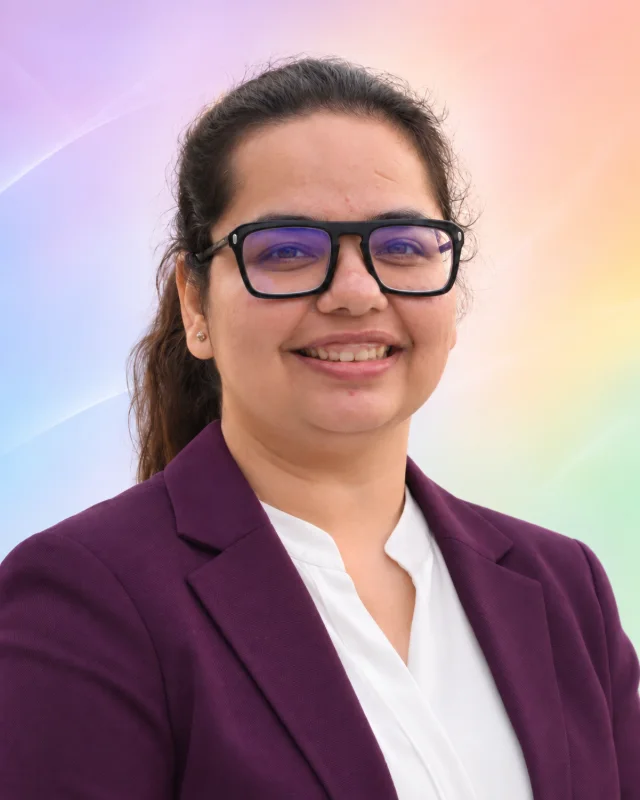
Dr. Sakshi Seth Grover
PhD. In psychology, PGDRP (Post graduate diploma in Rehabilitation Psychology) (RCI CRR- A118591), Counsellor, Psychotherapist, Career Coach, Family Therapist & Organizational Psychologist, UGC NET Qualified. 10+ Years of Experience.

Shreya Dhasmana
M.A. Applied Psychology, B.A. Hons. Sociology, PG Diploma in Guidance & Counseling. Trainer for applied psychology, counseling and therapy-oriented learning.
Practical outputs that support cognitive therapy readiness.
The diploma is designed to help learners build structured, ethical and applied cognitive therapy habits.
Case conceptualization framework
Learn to map triggers, thoughts, emotions, behaviors, core beliefs and intervention priorities across cognitive therapy models.
Therapy worksheets and tools
Build familiarity with thought records, belief worksheets, diary cards, values journaling and structured homework.
Model selection clarity
Understand how CBT, REBT, DBT and ACT can be selected or integrated based on the client’s context and therapeutic goals.
Final case portfolio
Prepare a full therapy case plan, presentation and viva-ready reflection as part of supervised project work.
A structured diploma experience built for serious learners.
The program combines live teaching, supervision exposure, study support, assessment and certification documentation.
Standing strong since 2018.
Cognizavest has trained learners across psychology programs with a focus on structured learning, applied clarity and professional exposure.
Career and learning support
The diploma supports academic progression, skill development, internship readiness and professional confidence in cognitive therapies contexts.
Choose your registration plan.
Select the monthly payment plan or full course fee option. Checkout uses the existing WooCommerce product IDs from the old registration code.
Diploma in Cognitive Therapies
Live online diploma with 7 papers, practical work, supervision orientation, hardcopy study material and diploma documentation after successful completion.
- 20+ supervision hours
- Online examinations and practical requirements
- Final case submission and viva
- Hardcopy study material and diploma documentation
Learners appreciate practical examples, clarity and supportive teaching.
Reviews are selected from Sakshi’s Padlet feedback, with CBT and cognitive-therapy learning feedback highlighted.
“The sessions have been very fruitful, easy to adapt with and super informative. I have learnt so many new things and techniques.”
“The content was well-designed. Parallel assignments made it easier to understand the concept and gave hands-on exposure.”
“The structured approach and practical insights helped me understand and apply CBT concepts more effectively.”
“Sessions are very engaging. Sakshi Ma'am explains concepts in a lucid way and shares practical client experiences.”
“The course was clear, interactive and genuinely uplifting. Complex ideas became easy to understand.”
“Very informative and interactive course.”
“Ma’am's teaching style is excellent. She is patient with us and resolves every single doubt before class ends.”
“The classes are valuable and well-structured. The concepts were taught clearly with practical relevance.”
“Your deep knowledge of CBT and the clarity with which you teach make even complex concepts feel simple and practical.”
“I appreciated how you broke down complex CBT formulations into practical, actionable steps.”
“The course has been really helpful in brushing up concepts while giving a clearer understanding of deeper aspects of CBT.”
“The examples used are highly practical and relatable, which enhances learning.”
Everything learners usually ask before enrolling.
Course format, eligibility, syllabus, payment and completion information are grouped for quick review.
Are the classes conducted live? +
Yes. Classes are conducted live online through Google Meet, and recordings are provided for reference.
Who can enroll in this diploma? +
This diploma is designed for psychology-background learners, including psychology students, graduates, postgraduates and relevant mental-health professionals.
Will my diploma have recognition? +
The program includes Skill India / NCVET aligned certification positioning and diploma documentation after successful completion.
What are the basic criteria for completing the course? +
Students need a minimum 60% attendance and at least 40% marks in practicals and examinations to complete the diploma successfully.
How much time do I need apart from live classes? +
Students should keep around 4–6 hours per week apart from live classes for reading, assignments, revision and deeper understanding.
What therapies are covered in this diploma? +
The program covers foundations of cognitive therapies, CBT, REBT, DBT, ACT, therapy integration, special populations, supervised internship and final project work.
Is the course practical or only theoretical? +
The course combines theory with assignments, case discussion, role plays, homework planning, final case submission and viva requirements.
Does the course include a final project? +
Yes. Paper 7 includes supervised internship and final project work with a full therapy plan, case presentation and reflection.
What are the payment options? +
You can select the monthly payment plan or the full course fee option during registration.
What is the fee? +
The fee is ₹18,000 for both the monthly payment plan and the full course fee option.
What payment methods are accepted? +
Checkout supports common online payment methods including UPI, cards, net banking and other available payment options on the website.
What is the refund policy? +
Registrations follow the institute’s standard no-refund policy. Batch shift requests may be considered as per the policy and timeline.
When will I receive class details? +
After payment confirmation, the team will guide you through the admission process and share classroom information before the batch begins.
Where will materials and recordings be shared? +
Class communication, materials, tasks and recordings are typically shared through Google Classroom / Workspace channels.
Will I get hardcopy study material and diploma documentation? +
Yes. The program includes hardcopy study material and diploma documentation after successful completion.
Build cognitive therapy confidence from model clarity to case planning.
This diploma is for psychology learners who want structured cognitive therapy knowledge, practical tools, model integration and supervised case-project readiness.
