












Certificate Course in Schema Focused Therapy
Embark on a structured, practice-oriented learning journey with our Certificate Course in Schema Focused Therapy. Designed for aspiring and practicing mental health professionals, this program helps you understand how early life experiences shape core beliefs (schemas), coping styles, and repeated relationship patterns. Through step-by-step conceptualization and intervention training, you’ll learn to apply schema techniques to real client concerns—such as anxiety, depression, trauma responses, low self-esteem, and relationship difficulties. By the end of the course, you’ll be confident in building a schema formulation, planning treatment, and using evidence-informed tools to create meaningful therapeutic change.
Hurry! Limited Seats Per Cohort
- Fees Starts From 2999
- Batch starts from Starts 19th February 2026
- 1 to 3 Months Program
- Mode Online
- 5pm to 6pm Class Timings
- Tuesday & Thursday Classes
Skill Level
Practitioner
Total Duration
12 to 48 Hours
Modules
4 to 9
Credits
1 to 2
Overview of the Course
- NCVET Skill India Approved Course
- Industry exposure along with practical learning
- New Education Policy based curriculum
- Focus on Experiential learning through internship and practical exposure
- Continuous Assessment and Feedback
- Practitioner Certificate for Practitioner Level

Key Highlights
Highlights of the program
1 to 3
Months
6 to 18
Modules
12+
Supervision Hours
21st
Century Skills
12 to 48
Total Hours
Practical
Based Program
Syllabus
Module 1: Introduction to Schema Focused Therapy
- Evolution of Schema Therapy
- Integration of CBT, attachment theory, psychodynamic concepts, and experiential therapies
- Core assumptions of schema therapy
- Difference between schemas, automatic thoughts, and core beliefs
- Indications and scope of schema therapy
Module 2: Emotional Needs and Origins of Schemas
- Core emotional needs in childhood
- Development of early maladaptive schemas
- Role of parenting styles, trauma, neglect, and temperament
- Schema perpetuation across lifespan
- Schema maintenance cycles
Module 3: Schema Domains and Individual Schemas (Part I)
- Disconnection & Rejection domain
- Impaired Autonomy & Performance domain
- Detailed understanding of schemas within each domain
- Schema triggers and emotional responses
Module 4: Schema Domains and Individual Schemas (Part II)
- Impaired Limits domain
- Other-Directedness domain
- Overvigilance & Inhibition domain
- Schema intensity, rigidity, and flexibility
Module 5: Introduction to Schema Modes
- Concept of schema modes
- Difference between schemas and modes
- Child modes, coping modes, parent modes, healthy adult mode
- Mode switching and emotional dysregulation
Module 6: Case Conceptualization
- Taking a schema-focused history
- Identifying dominant schemas
- Linking schemas with presenting concerns
- Introduction to schema formulation
Duration – 1 MONTH
Module 1 to 6 of beginner level
Module 7: Schema Modes in Depth
- Detailed exploration of child modes
- Coping modes: surrender, avoidance, overcompensation
- Parent modes: punitive, demanding
- Strengthening the healthy adult mode
Module 8: Cognitive Techniques in Schema Therapy
- Cognitive restructuring from a schema lens
- Schema dialogues
- Evidence for and against schema beliefs
- Reframing schema narratives
Module 9: Experiential Techniques – Imagery Work
- Imagery rescripting: rationale and process
- Accessing emotional memory safely
- Therapist role during imagery
- Managing emotional intensity
Module 10: Chair Work and Mode Dialogues
- Chair work principles
- Dialogues between modes
- Working with the punitive parent mode
- Strengthening healthy adult voice
Module 11: Behavioral Pattern Breaking
- Identifying schema-driven behavior patterns
- Designing behavioral experiments
- Gradual pattern modification
- Reinforcing adaptive behaviors
Module 12: Case Conceptualization
- Mode-based case formulation
- Selecting interventions based on modes
- Addressing resistance and avoidance
- Managing emotional flooding
Duration – 2 Months
Module 1 to 12 of Beginner & Expert Level
Module 13: Limited Reparenting and Therapeutic Relationship
- Concept and purpose of limited reparenting
- Therapist stance and emotional attunement
- Boundaries and ethical considerations
- Managing dependency and attachment dynamics
Module 14: Schema Therapy with Complex Presentations
- Chronic depression and anxiety
- Trauma-related schemas
- Personality patterns and relational difficulties
- Working with ambivalence and Ethical dilemmas
Module 15: Resistance, Drop-out Risk, and Ruptures
- Understanding resistance through schema modes
- Rupture and repair in schema therapy
- Managing avoidance and emotional shutdown
- Therapist reactions and self-regulation
Module 16: Ethics in Schema Focused Therapy (Dedicated Module)
- Ethical principles specific to schema work
- Emotional safety during experiential techniques
- Managing power dynamics
- Confidentiality, consent, and therapist responsibility
- Therapist self-monitoring and supervision needs
Module 17: Therapist Schemas and Countertransference
- Therapist’s own schemas
- Impact on therapeutic process
- Managing countertransference reactions
- Self-reflection and professional growth
Module 18: Practitioner-Level Case Integration
- Full schema and mode formulation
- Intervention planning
- Monitoring progress
- Preparing for real-world clinical application
08 Write-Up Cases
Duration – 3 Months
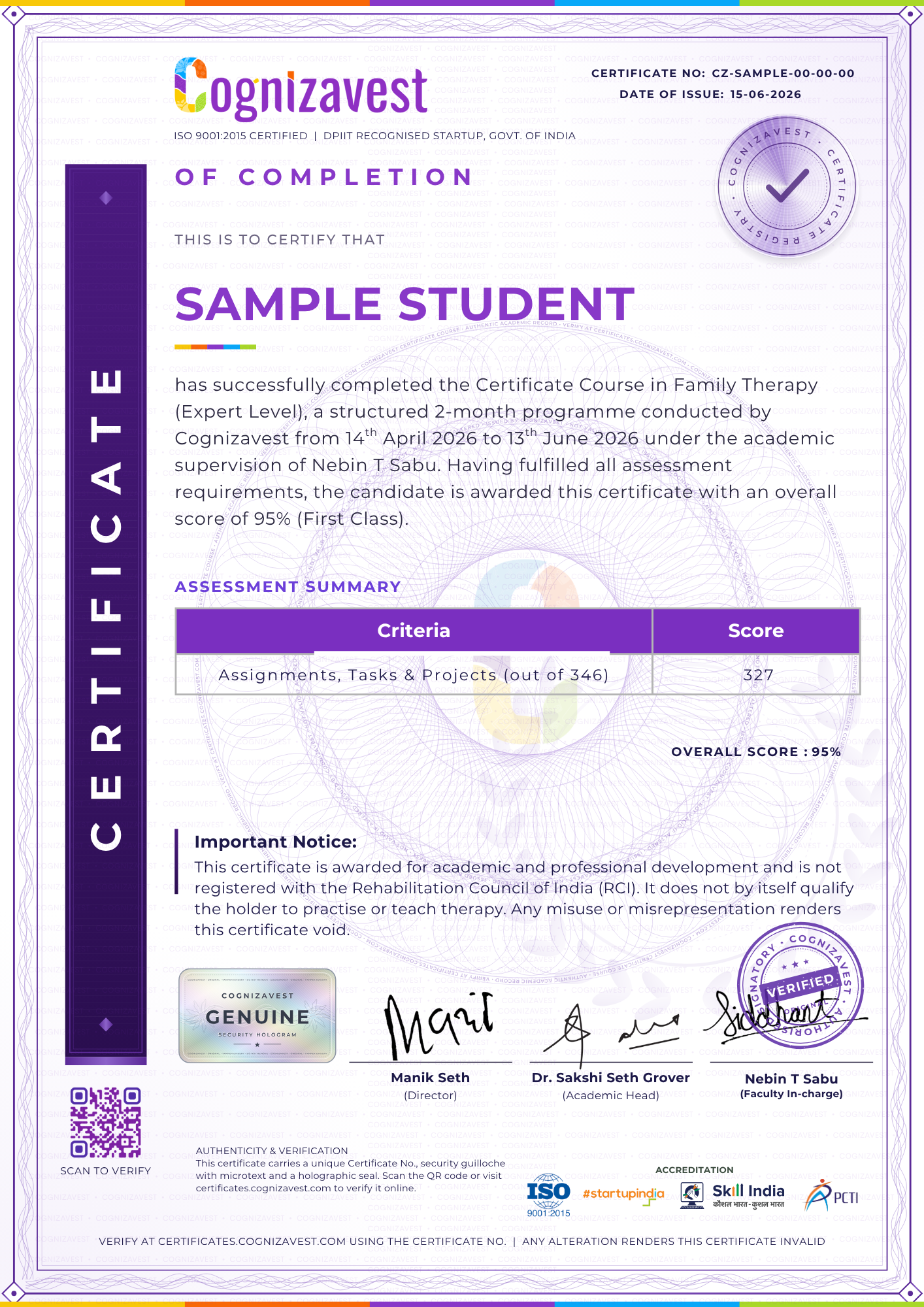
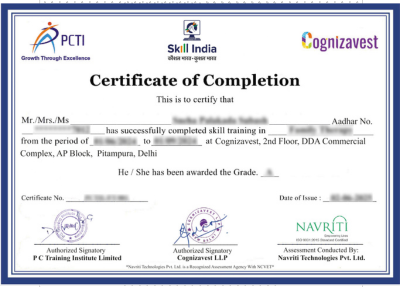
Cognizavest provides courses that seamlessly integrate practical exposure in alignment with the latest National Education Policy (NEP) curriculum. Our programs uniquely blend industry and academic components, offering a holistic and comprehensive learning experience. Moreover, upon successful completion, practitioners will now receive an NCVET certificate, significantly enhancing the value and global acceptance of their skills.
Meet your trainers of the program

Dr. Sakshi Seth Grover
PhD. In psychology, PGDRP (Post graduate diploma in Rehabilitation Psychology) (RCI CRR- Awaited), Counsellor, Psychotherapist, Career Coach, Family Therapist & Organizational Psychologist, UGC NET Qualified. 10+ Years of Experience

Shreya Dasmana
M.A. (Applied Psychology), B.A. Hons. (Sociology),
Details about the progam
Details about the program schedule, including timing of live classes, session days, and other pertinent information.
05pm to 06pm
Class Timing
Tuesday & Thursday
Days For Live Classes
Google Meet
Platform For Live Classes
Industry Based
Course Format
Hardcopy
Certificate
Recording Access
For Live Classes
Program Registration
Ready to Excel with Our Certificate Course
- Compact pocket-sized journal (easy to carry)
- Premium 100gsm handmade paper (smooth, bleed-free)
- 50 mandala designs for stress-relief coloring
- 50 plain sheets for writing / sketching
- Durable soft cover (matte finish) + perfect binding
3-Month Plan Details

Our Students Review
Why go for our Certificate Courses
Cognizavest provides courses that seamlessly integrate practical exposure in alignment with the latest National Education Policy (NEP) curriculum. Our programs uniquely blend industry and academic components, offering a holistic and comprehensive learning experience. Moreover, upon successful completion, practitioners will now receive an NCVET certificate, significantly enhancing the value and global acceptance of their skills.
What you get to learn ?
Skills acquired by the candidate
Graduates of this course will develop a strong foundation in Schema Therapy concepts including schemas, modes, coping styles, and unmet emotional needs. You will learn how to assess presenting concerns, identify dominant schemas and modes, and build a clear case formulation. Participants will also gain practical exposure to key schema interventions such as imagery rescripting, chair-work dialogues, limited reparenting principles, and behavioral pattern breaking—helping you tailor therapy to each client’s unique history and goals.
Post-Course Career Readiness
After completing this course, learners will be prepared to apply Schema Therapy skills across diverse counseling and mental health settings such as clinics, private practice, schools, wellness programs, and community support services. With a clear understanding of schema conceptualization and structured treatment planning, you’ll be equipped to support clients dealing with long-standing emotional patterns, personality-related challenges, and relational difficulties—strengthening your clinical confidence and professional readiness.
Students will benefit from industry exposure
Students will gain hands-on learning through guided demonstrations, case discussions, supervision-style feedback, and structured practice activities. This exposure helps bridge the gap between theory and real-world clinical work while building essential professional skills like critical thinking, clinical reasoning, communication, documentation, and ethical decision-making. Participants also benefit from collaborative learning, peer interaction, and practical assignments that support career growth in today’s evolving mental health landscape.