



















Diploma in De-Addiction Counselling
Develop a structured, non-judgmental approach to substance-use and behavioural addiction concerns. Across five papers and six months, study motivational interviewing, family systems, risk awareness, CBT relapse prevention, ACT, ethical referral and recovery planning.
Learners from leading universities. Alumni at global organisations.
Addiction work asks for more than advice. It asks for safety and a recovery plan.
Triggers, shame, emotional coping, family relationships, social pressure and safety all shape a person’s experience. Ethical counselling means seeing the context, not simply demanding abstinence.
Five carefully sequenced papers
From addiction patterns and motivation to families, risk management, MI, MET, CBT, ACT and advanced practice systems.
Relapse is planned for, not feared
Lapse versus relapse, high-risk situations, coping rehearsal and a relapse recovery plan within 24 hours of a lapse.
Live twice a week
Tuesdays and Thursdays, 5–6 PM IST on Google Meet, with recordings as provided.
Taught by clinical psychology faculty
Ayesha Narmawala (RCI registered) and Wasuddha Tikmani (Ph.D. Scholar, SET Qualified).
Assessed and documented
Case-based assignments, practicals and examinations lead to diploma documentation and a marksheet in hardcopy.
Five papers. One thoughtful journey through addiction counselling.
Select a paper, then open any topic area to see exactly what is taught, from addiction essentials to advanced case labs.
Watch your counselling skills take shape
Drag through the programme to see how each paper builds the seven programme learning outcomes (PLOs).
Illustrative map based on which papers develop each outcome.
Notice. Motivate. Protect. Prevent relapse.
Work through a short, fictional addiction case and see how a recovery-focused counsellor responds, and which paper prepares you for each decision.
Where you learn this
- 1NoticePaper I · alliance, patterns
- 2MotivatePaper IV · MI, MET
- 3ProtectPapers I & III · risk, referral
- 4Prevent relapsePapers IV & V · CBT, aftercare
A teaching example. Real decisions follow full assessment, consent and supervision.
Know what to do, and when to refer
Addiction counselling works within clear boundaries. The diploma trains you to recognise what sits in a counsellor’s role and what needs medical or legal input.
MI, MET, CBT, ACT, family work, craving tools and aftercare planning.
Taught in depthWithdrawal management, detoxification and medication decisions.
Medical domainOverdose, self-harm and violence red flags, with a safety plan and referral.
Crisis-readyIntake, consent, crisis and discharge notes; working with services.
Professional systemsCounsellor role or referral?
Sort six real-world situations. Each answer shows where the diploma covers it.
Use motivational interviewing to explore ambivalence about drinking
Prescribe medication to manage alcohol withdrawal
Build a craving plan with urge surfing and coping cards
A client reports tremors, confusion and hallucinations after stopping
Run a family session on enabling versus supporting
Decide on a forced admission because the family insists
A teaching exercise. In practice, follow your organisation’s protocols and local regulations.
Your six months, month by month
An indicative view of the January 2027 batch with the instalment schedule. Exact assessment dates are shared by the programme team.
’27Classes beginThu 21 Jan, 5 PM IST₹2,000 at registration
’27Month 1 completeLive classes continue₹4,000
’27Month 2 completeLive classes continue₹4,000
’27Month 3 completeLive classes continue₹4,000
’27Month 4 completeLive classes continue₹4,000
’27Month 5Advanced case labs
’27Six months completeExaminations & results
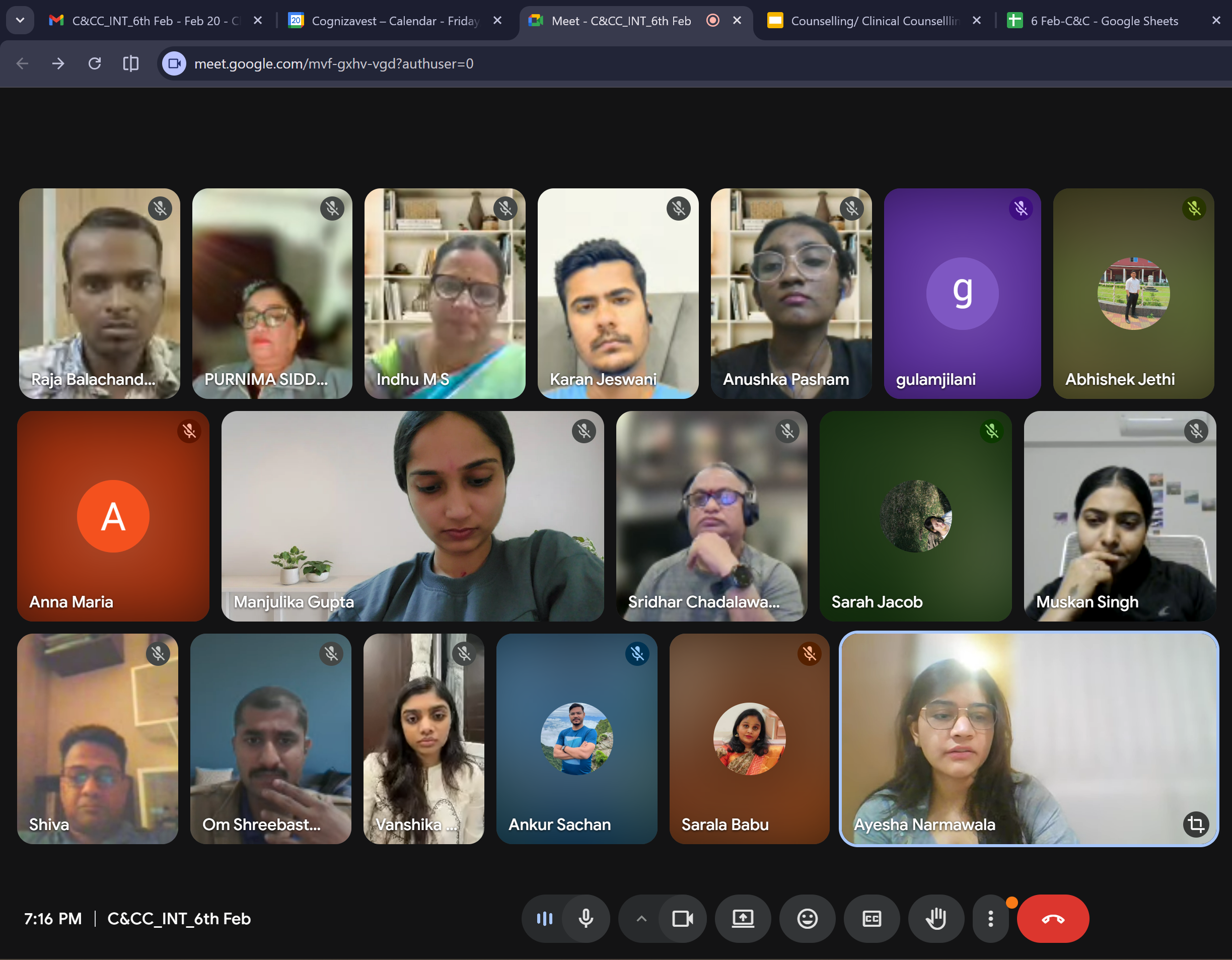
A look inside our online learning sessions
Live classroom
Learning together. Working carefully with real counselling dilemmas.
Live teaching, structured case discussion, roleplay-oriented reasoning and assignments on safety, family dynamics and recovery planning.
Tue & Thu · 5–6 PM IST via Google Meet.
Hardcopy study material, assignments and recordings as provided.
MI, CBT, ACT, safety, relapse prevention and referral indicators.
Patterns, motivation, cravings, family responses and boundary dilemmas.
Classroom photographs show real Cognizavest sessions across different courses; trainers, participants and activities will vary by cohort.
Meet your De-Addiction Counselling trainers
Faculty associated with this programme. Select a profile for full credentials. Faculty allocations may vary by batch.
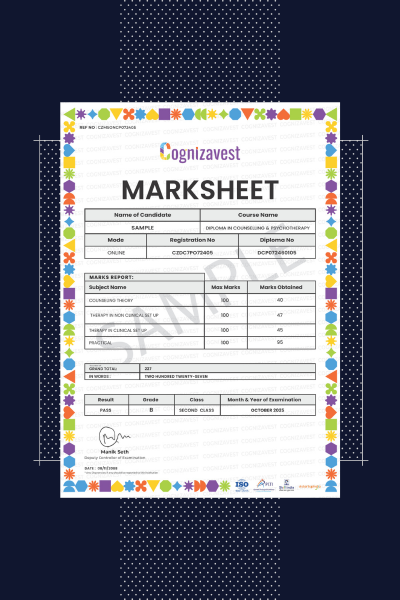
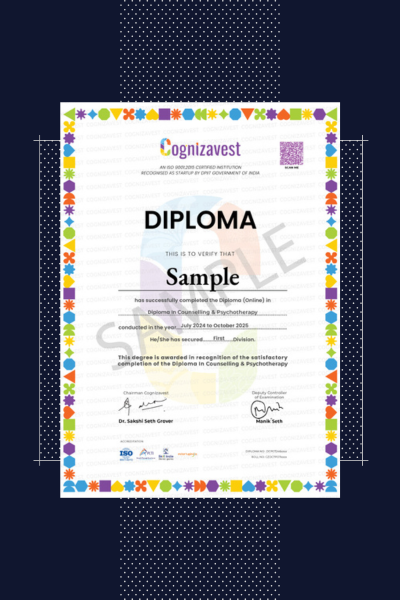
Sample documents. Final design may vary.
Document the learning. Understand what completion represents.
Participate in live sessions, complete the required case-based assignments and meet the stated examination and practical criteria. Diploma documentation follows results.
The diploma is
- A structured six-month addiction counselling programme
- Five papers from addiction essentials to advanced case labs
- Case-based assignments, practicals and examinations
- A Cognizavest diploma certificate and marksheet
The diploma is not
- A university degree
- An RCI clinical psychologist qualification or practice licence
- Authorisation to provide medical detoxification or prescribe
The program mentions Skill India / NCVET-related positioning; ask admissions to confirm the exact awarding body and credential terms for this batch.
Certificate, diploma or advanced diploma?
How this diploma compares with Cognizavest’s other study levels.
Certificate course
- Duration
- 1–3 months
- Scope
- One focused topic
- Assessment
- Course completion
- Documents
- Certificate
This diploma
- Duration
- 6 months
- Scope
- 5 papers, essentials to case labs
- Assessment
- Assignments, practicals, exams
- Documents
- Diploma certificate + marksheet
Advanced diploma
- Duration
- 7 months
- Scope
- Advanced practice pathways
- Assessment
- Case-lab orientation, advanced outputs
- Documents
- See programme page
₹17,000 in full, or ₹2,000 to start
Choose ₹2,000 at admission plus four payments of ₹4,000 (₹18,000 total), or pay ₹17,000 in full and save ₹1,000. Review the schedule before checkout, or request a call first.
How would you like to pay?
- 1Admission fee, at registration₹2,000
- 2After month 1₹4,000
- 3After month 2₹4,000
- 4After month 3₹4,000
- 5After month 4₹4,000
- ₹Total fee (instalments)₹18,000
Secure checkout on cognizavest.com
The ₹2,000 registration amount is included in the ₹18,000 installment total. Remaining payments follow the schedule above; please review the current cancellation, transfer and refund terms at checkout or with admissions.
Need clarity before you decide?
Ask about eligibility, the five papers, the live schedule, medical referral boundaries, assessments or documentation. No payment is needed.
We use your details only to respond to this admissions enquiry. Prefer chat? WhatsApp admissions
What learners say about Cognizavest classes and educators
Feedback from other Cognizavest classes and educators, not reviews of this specific diploma or its upcoming cohort.
The sessions are insightful and well-structured. The case discussions and practical techniques made the concepts easy to understand and apply.
The classes are engaging, with real life examples based on evidence. Notes are provided as well. Overall the classes are really good.
Every session was full of learning and was very interactive. I had lots of fun answering questions and learning new things.
The sessions were well-structured and highly informative. Practical examples and case discussions enhanced my learning.
The classes are clear, engaging, and very helpful. I am understanding the topics well.
Your patience, warmth and clarity in explaining things made learning come naturally and motivated me.
The examples given are very helpful and help to get a better picture of the concept.
The instructor’s ability to bridge complex theory and real-world application through case studies improved my confidence.
The sessions were thoughtfully structured and created a safe, encouraging, non-judgmental space.
The teaching style made complex topics easier to understand, and the encouraging attitude created a positive learning environment.
The sessions are very clear and engaging, and concepts are made clear with real life examples.
She acknowledged each participant. The session was engaging and informative.
Questions worth asking
Live classes, eligibility, therapies, safety and referral boundaries, the syllabus, the January batch and payments. Still unsure? Request a call.
Yes. Classes are conducted live online through Google Meet, and recordings may be provided for reference according to program communication.
This diploma is designed for psychology learners and allied helping professionals in counselling, social work, rehabilitation, NGO/community care and related support roles.
No. The program focuses on counselling, assessment logic, motivation, family work, risk identification and referral readiness. Medication management and detoxification remain medical domains.
Faculty named for this programme are Ayesha Narmawala (PGDRP, RCI CRR A85502, M.A. Clinical Psychology, B.A. Psychology, 4+ years of experience) and Wasuddha Tikmani (Ph.D. Scholar, M.A. Clinical Psychology, B.A. Psychology, SET Qualified). Teaching allocations can vary by batch.
The program description mentions Skill India / NCVET-aligned positioning. Confirm the exact issuing body, documentation, additional fees (if any) and whether the credential carries formal recognition with admissions. This diploma does not itself confer a professional practice licence.
The diploma includes 5 papers across addiction essentials, family work, risk management, psychotherapies in de-addiction and advanced practice topics.
Yes. The syllabus includes gaming, gambling, pornography/sex, shopping and social media addiction patterns alongside substance-use concerns.
Yes. The diploma includes enabling versus support, codependency basics, family pressure, blame cycles and psychoeducation for home recovery support.
Yes. Learners are introduced to self-harm, violence, overdose, withdrawal red flags, safety planning, documentation and referral boundaries.
The diploma batch has one live timing: 5 PM – 6 PM on Tuesday and Thursday.
The batch starts on 21st January 2027.
Yes. The program includes hardcopy study material and diploma documentation after successful completion.
The installment plan totals ₹18,000: ₹2,000 now, then four scheduled payments of ₹4,000. The one-time full payment is ₹17,000, a ₹1,000 saving.
No. Training concerns counselling, motivation, family work, risk awareness and referral decisions. Medical withdrawal management, prescribing and detoxification remain the responsibility of appropriately qualified medical professionals.
Assess with care, support change, and know when to refer.
Diploma in De-Addiction Counselling · Online · 6 months · Starts 21 January 2027
